
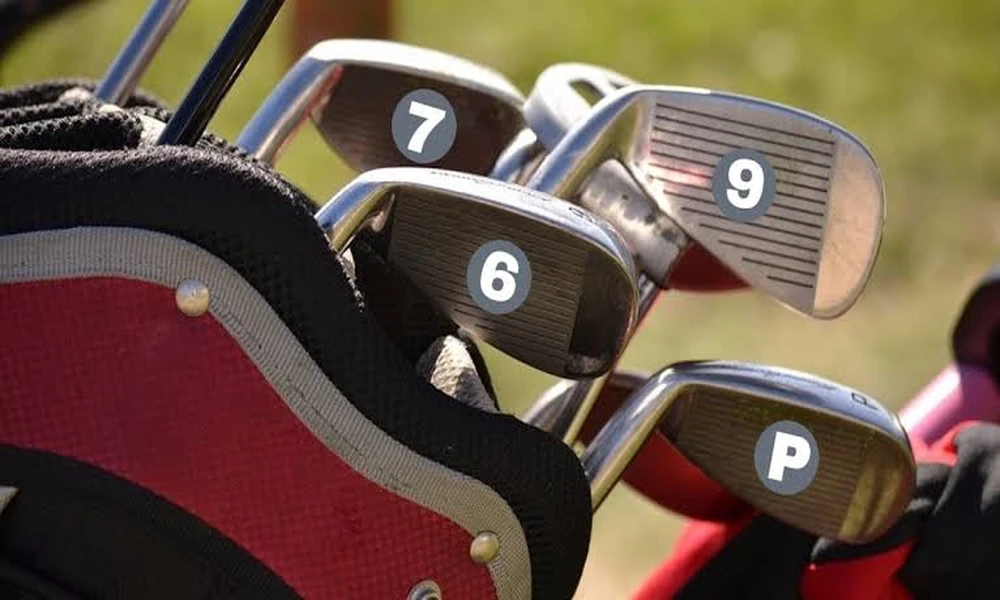
Iron numbers define what a club does and where it fits in the bag, and most players carry a set running across a specific number range rather than every iron ever made. Golfers reviewing iron selection find that golf irons run from long numbered clubs through to short irons, with each number corresponding to a loft angle and a distance band. The sections below walk through that full range and explain how different player types select from it based on their game and their handicap level.
Iron number range
- Iron numbering runs from two at the longest and lowest loft end through to nine at the shortest and highest loft end, with some sets including a pitching wedge as the final numbered club. Typically, a two iron has the lowest loft of all irons, around eighteen degrees, and produces the most powerful and longest ball flight, covering distances over two hundred yards for fast swing speed players and reliable ball strikers.
- This next band of irons covers roughly one hundred and seventy to two hundred yards, and you need to strike these long irons precisely to launch them cleanly. A four iron has a higher level of contact quality than any other club in the middle of a bag, so many recreational players prefer hybrids to carrying three and four irons as traditional irons, because they accept the inconsistency they bring with them.
- There is a range of lofts between five and seven irons that cover a middle distance range of about 100 to 120 yards, where consistent contact can be achieved regardless of swing speed or skill level. This is the band where most golfers feel most comfortable, and it is where iron play becomes reliable rather than occasional. Eight and nine irons close the iron set in the short distance band, covering eighty to one hundred and forty yards with higher loft, a shorter shaft, and more stopping power on landing. Nine irons at around forty-one to forty-four degrees of loft produce high enough ball flight to hold most green surfaces without rolling past the flag on a well struck shot from the fairway.
Player iron selection
Which irons belong in a specific bag depends entirely on what that player strikes consistently, and the answer differs meaningfully across handicap levels rather than following one standard set configuration. Beginner and high handicap golfers typically carry a seven iron through pitching wedge as their iron set, skipping long and middle irons entirely in favour of hybrids that cover the same distances with far more forgiveness on off-centre strikes. Starting the iron set at seven keeps the loft high enough for a reliable launch without demanding the precise contact long irons require on every swing, and the distance gaps left by removing the two through six irons are covered cleanly by two or three hybrids that most beginners handle far better.
Mid handicap players generally carry a five iron through pitching wedge, adding the five and six iron as ball striking improves and centre face contact becomes consistent enough for lower lofted clubs to perform reliably. Low handicap and scratch players carry the full set from three or four iron through pitching wedge, having developed the strike quality and swing consistency to use long irons across varied course conditions, different lies, and wind situations that recreational players encounter far less frequently during a standard round.